ANR MIGRASENS : Molecular Imprinted polymer/GRAphene for environmental microSENSors network
ANR MIGRASENS (2021-2026)
https://anr.fr/Projet-ANR-20-CE04-0011
Partners:
- ICMN (porteur Orléans)
- L2C (Montpellier)
- Annealsys (Montpellier)
Micropollutants present in aquatic environments—such as pharmaceutical residues, heavy metals, and pesticides—pose significant risks to both the environment and human health, despite their low concentrations. Current monitoring methods are limited by the need for complex equipment and lengthy delays in obtaining results. In this context, electrochemical sensors emerge as a promising solution for rapid, on-site detection of micropollutants.
The goal of the MIGRASENS project is to develop a new generation of environmental micro-sensor networks by combining the properties of graphene—such as conductivity, robustness, and electrochemical sensitivity—with the selectivity of molecularly imprinted polymers (MIPs). The aim is to design a lab-on-a-chip for detecting a wide range of priority micropollutants targeted by the European Water Framework Directive. The success of this ambitious project relies on the complementary expertise of the consortium. Their multidisciplinary approach provides a comprehensive view of the entire process, from graphene production to its integration into a multi-detection lab-on-a-chip prototype.
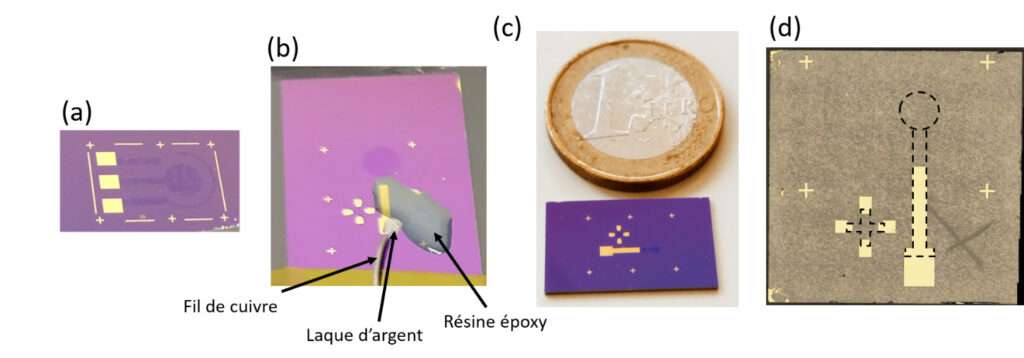
Two types of graphene have been studied: graphene obtained by chemical vapor deposition (CVD) and epitaxial graphene (EG) on silicon carbide. Key achievements include the development of a reliable transfer method for CVD graphene, the patterning of CVD and EG graphene electrodes via photolithography, and their electrochemical characterization. The successful synthesis of polypyrrole-based MIPs (MIP-PPy) on graphene monolayers has enabled the determination of the sensor’s analytical performance. Experimental results show promising detection of isoproturon using MIP-PPy/CVD-graphene sensors, achieving a detection limit of 20 μg/L.